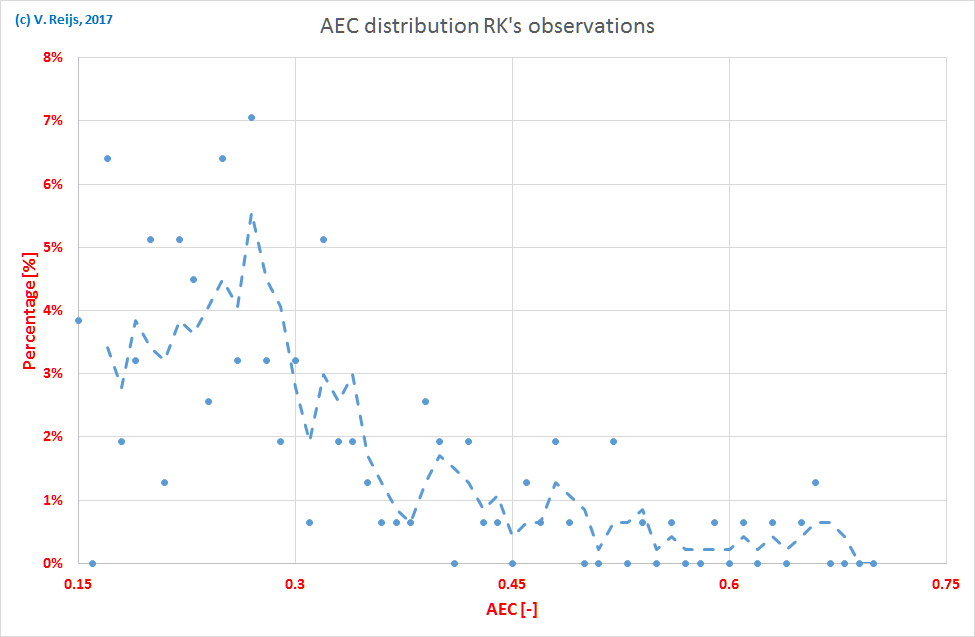
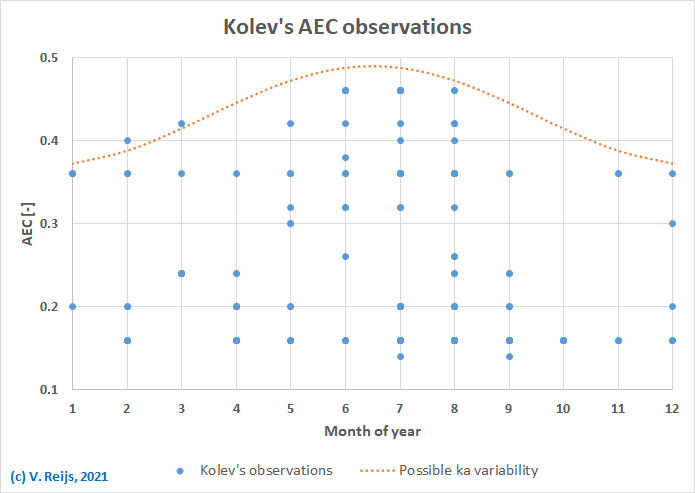
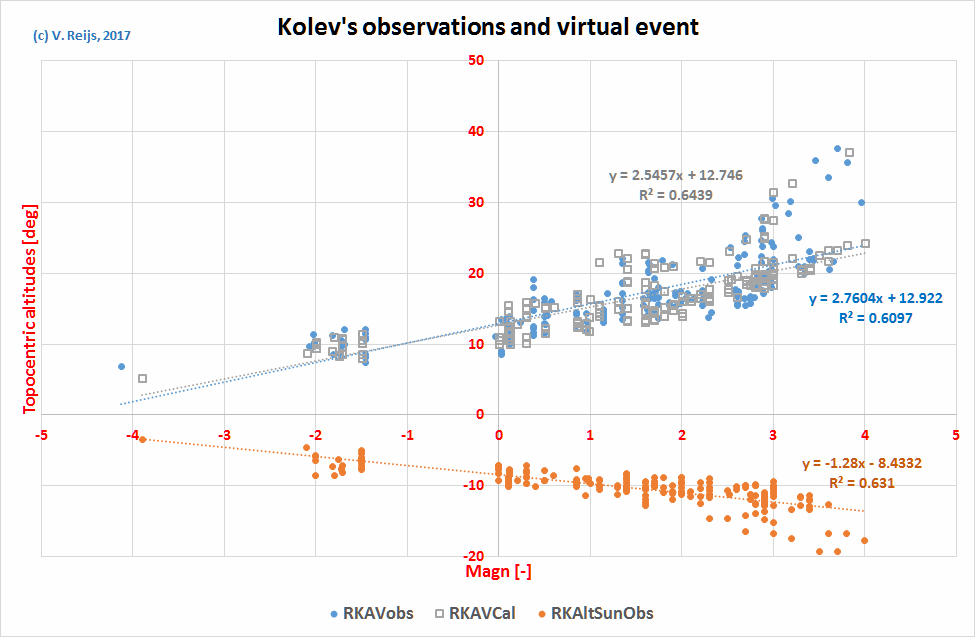
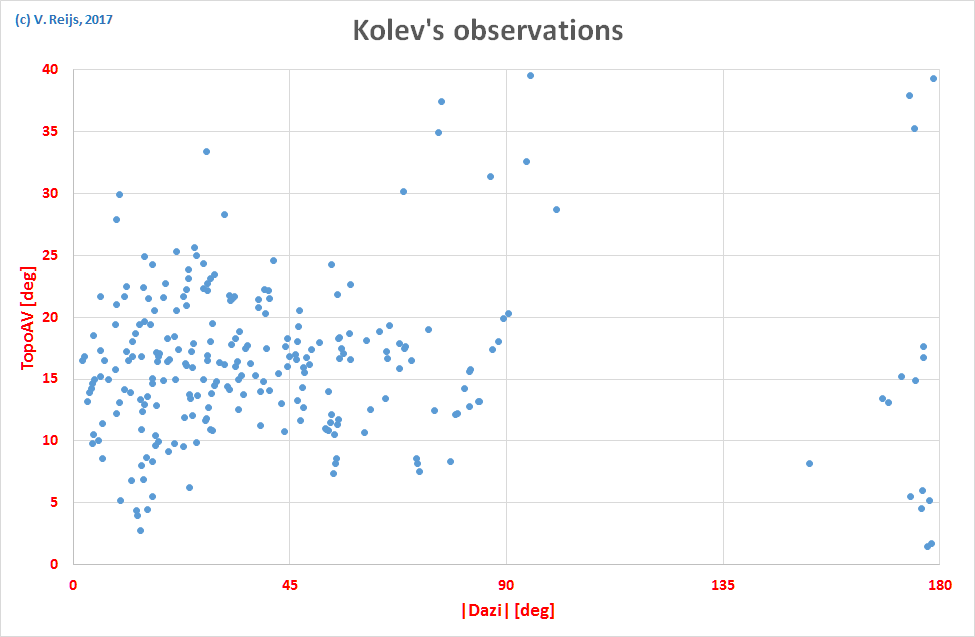
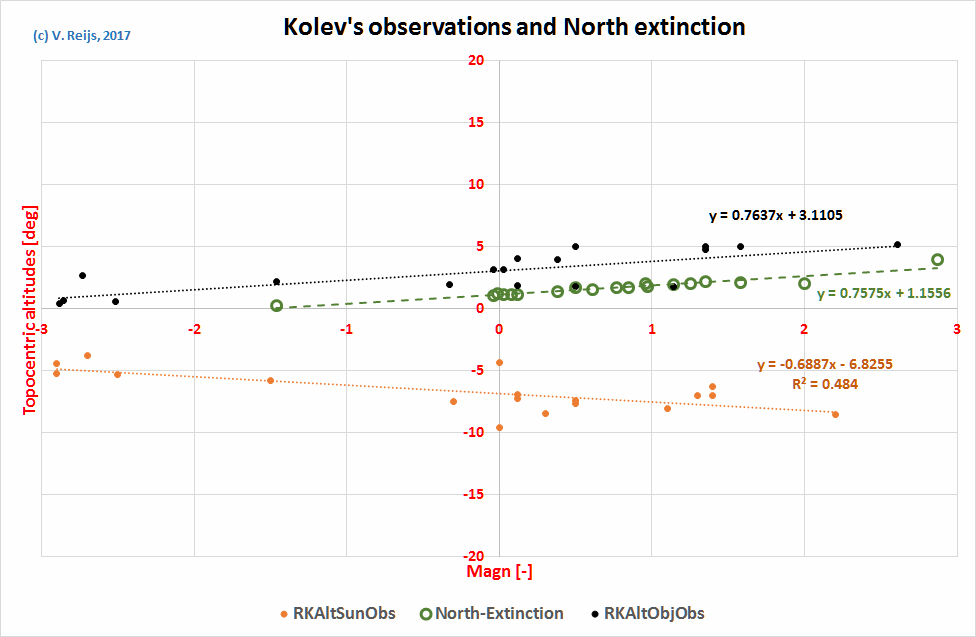
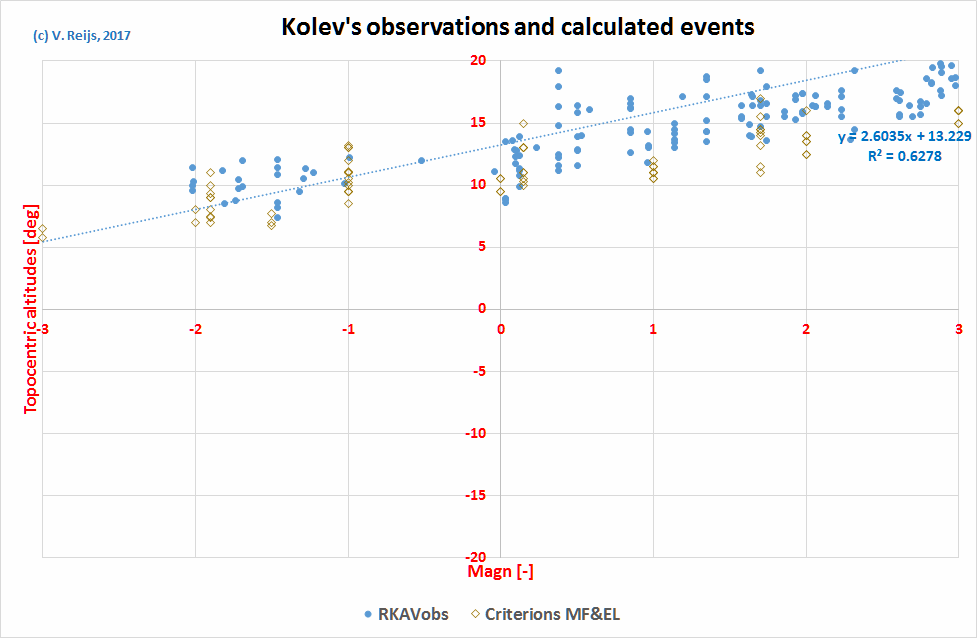
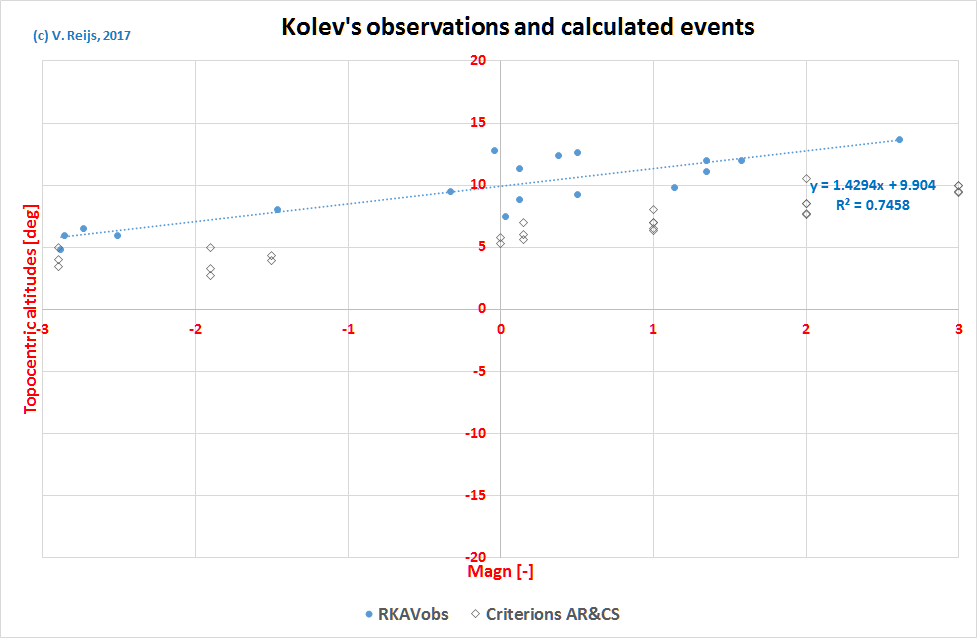
The star observations of Kolev
Kolev's observations are extensive for modern times! Amazing work
and thank you!!! The approximate 250 star and planet observations
(~230 MF&EL&ML&EF and ~20 CS&AR events) from Kolev's
database Heliacal practice were analysed (Kolev, 2013, page
237-263). The star, outer- and inner planet phases are explained on
this webpage.
Earlier some articles of Kolev (2001, 2006, 2007) had been evaluated (the
observations in these articles are also in Kolev, 2013).
Considering the observation database
Not many errors were found. We can distinguish them around
observations and around derived/calculated values.
Errors around observations:
- The Rozenberg's Airmass formula quoted by Kolev (f8, page 235)
has a '+' changed into '-'. That is why the values are so weird!
The correct Rozenberg
formula is relatively accurate (Schaefer, 1993, page 80).
- The evaluation of Schaefer (Kolev, 2013, page 235) is based on
Schaefer's older journal articles (Schaefer, 1987), no
comparison has been done to this newer one (Schaefer, 1993).
- An error in a Mars observation. The observation date 12 April
2007 CE (Kolev, 2013, page 247) seems not really possible
(checking with Schaefer's criterion and PLSV). No idea what date it could/should
have been.
- Several stars have different dates for the same heliacal
event, year, observer and location:
- with different AEC:
Alniyat/sSco (Kolev, 2013, page 256)
- with same AEC:
Acrab (Kolev, 2013, page 254)
Tejat (Kolev, 2013, page 256)
Theta2Tauris (Kolev, 2013, page 256)
Zubenelgenubi (Kolev, 2013, page 256)
Errors around derived/calculated values:
- Magnitudes are different than other literature values:
- Mercury: Kolev explicitly uses Schoch values (Kolev,
2013, page 245), which look to be too low (Siedelmann, 2013,
page 410).
- Theta2Tauris and Heka: both have a magnitude some 0.5
lower than SwissEphemeris star database (close to SIMBAD) values. This magnitude
difference is observable, because the Just Noticeable
Difference [JND] is around 0.2 (Farquhar, 1879, page 504).
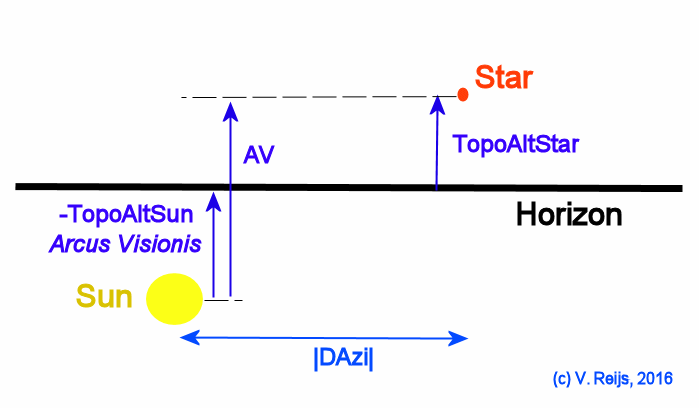
- Two objects seems to have a larger (calculated?) |DAzi| then
from SwissEphemeris/Stellarium calculations
- Venus: 15 June 2012 (Kolev, 2013, page 241)
- Zavijava: 13 Oct. 2002 (Kolev, 2013, page 258)
- The examples in The Virtual Heliacal Rise Table
section (Kolev, 2013, page 261-262) don't show the calculation
of |DAzi|'s influence properly: the minus sign is forgotten. The
Helical Rise Table Table XLVI is correct (Kolev, 2013,
page 263)
All the above don't have (significant) effect on the observations or
Kolev's criterion (Kolev, 2013, page 260, 263)
Star coordinates and magnitudes
Object coordinates were derived from DE403 and magnitudes from Kolev
or SwissEphemeris star database (close to SIMBAD).
The object altitudes mentioned by Kolev are the geocentric altitudes
(like the Sun's altitude) (Kolev, pers. comm, 2017). As star/Sun are
far away; geocoentric and topocentric are the same.
Some evaluation points
Below are some points coming out from the evaluation. If no heliacal
events are explicitly mentioned it relates to EL plus MF heliacal events.
References
Farquhar, Henry, 'The brightness and distribution of the fixed
stars', The popular science monthly, no. August (1879): 503-13.
Kolev, Rumen, 'Witnessing the heliacal rise of Sirius and
Procyon', Journal for the History of Astronomy 32, no. 107 (2001):
152-53.
Kolev, Rumen, Personal observations of heliacal phases of Mercury:
A detailed account, Varna, Bulgaria: Placidus research center,
2006.
Kolev, Rumen, 'Six observations of the heliacal rise of Sirius',
Journal for the history of astronomy 38, no. 131 (2007): 227-28.
Kolev, Rumen, The Babylonian astrolabe: The calendar of creation.
Edited by Simo Parpola. Vol. XXII, State archives of Assyria
studies, Helsinki: Neo-Assyrian Text Corpus Project, 2013.
North, John D., Stonehenge: Neolithic man and the cosmos:
HarperCollins, 1996.
Ohlsson, Josefin, and Villarreal Gerardo, 'Normal visual acuity in
17-18 year olds', Acta ophthalmol Scand. 83, no. 4 (2005): 487-91.
Schaefer, Brad E., 'Astronomy and the limits of vision',
Archaeoastronomy: The journal of astronomy in culture XI (1993):
78-91.
Schoch, Carl. 1924. 'The 'Arcus Visionis' of the planets in
the Babylonian observations', Monthly Notices of the Royal
Astronomical Society, Vol 84: pp. 731-34.
Seidelmann, P. Kenneth, and Urban Sean E., Explanatory Supplement
to the Astronomical Almanac. 3rd ed: University Science Books,
2013.
Acknowledgements
I would like to thank people, such as Rumen
Kolev for their help and constructive feedback. Any
remaining errors in methodology or results are my responsibility
of course!!! If you want to provide constructive feedback, let me know.
Disclaimer and Copyright
 Home
Home Up
Up Search
 Mail
Mail
Major content related changes: Feb 17, 2017